How to Eat to Avoid Inflammation
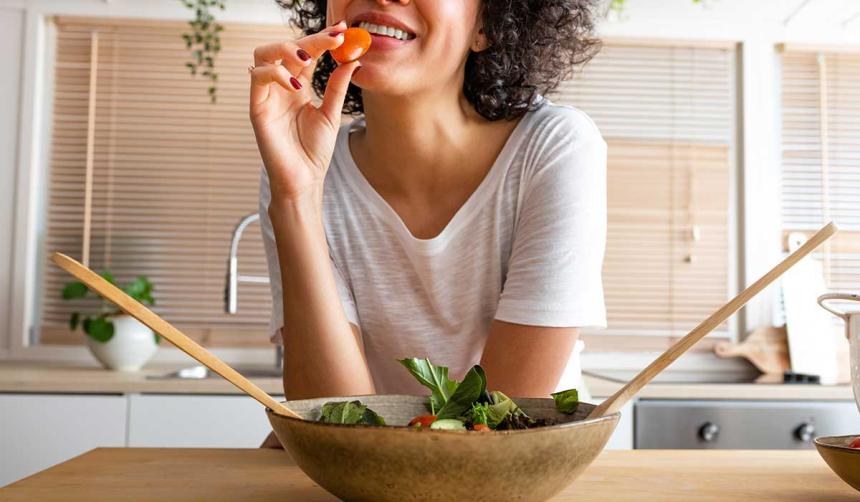
Eating well isn’t just about weight control: It can also help you manage inflammation to promote good health.
Inflammation is part of how the body heals itself. When you get a bee sting or a cut, the area swells, turns red and is painful to touch or even move. That’s inflammation at work. Normally, it goes away as your body repairs itself — within a few hours after a sting or up to a week after a cut. In these cases, inflammation’s a good thing.
But when your body experiences inflammation and it doesn’t go away, it becomes a serious problem. Chronic inflammation is associated with rheumatoid arthritis, high blood pressure, heart disease, GI disorders, depression, type 2 diabetes, lung diseases, some types of cancer and other conditions.
What you eat — and how you eat — can make a significant difference. Following a Mediterranean-style diet, for example, can reduce one of the biomarkers of inflammation, C-reactive protein, (CRP) by as much as 24 percent, according to a review published in the journal Advances in Nutrition.
Here are other ways to eat to avoid inflammation.
Fruit and vegetables — organic, if possible.
Plants contain compounds that are anti-inflammatory, and you want a variety because different compounds act in different ways. Some stand-outs to add include dark (red, purple and black) grapes, berries, onions, asparagus, broccoli and citrus. Frozen, fresh, dried, and canned produce all count — just avoid added sugar.
(Refined sugar can cause inflammation. But don’t worry about the sugar in fruit; the Academy of Nutrition and Dietetics considers foods with naturally occurring sugar as healthy choices.)
Organic food is inversely related to lower biomarkers of inflammation, even when adjusted for vegetarian diets, according to a study published in the journal Public Health Nutrition. This study noted that it’s not just that organic food contains fewer pesticides and herbicides. It also contains more beneficial compounds, such as higher concentrations of vitamin C, iron and magnesium in organic produce, more essential amino acids in organic grains and more beneficial fatty acids in organic animal products.
Get your probiotics and prebiotics.
Growing evidence shows gut bacteria play a significant role in your immune system and conditions related to inflammation. They produce short-chain fatty acids, which are anti-inflammatory. Look for foods with live bacteria; you want both the probiotics — the bacteria — and prebiotics, fiber-rich foods which feed the bacteria. Fermented foods like low-fat yogurt, miso, kimchi and sauerkraut contain probiotics. Enjoy fruit, vegetables and whole grains for the prebiotics.
Save grilling and deep frying for special occasions.
Cooking methods matter because of the compounds each process produces. Grilling, roasting, and frying — what scientists and chefs call dry heat, low moisture methods — create compounds called advanced glycation end-products (AGEs) that lead to inflammation and disease. Save those cooking methods for special occasions. For daily cooking, try braising, steaming, poaching, using a slow cooker or stir-frying, which is typically quick. When you grill, marinate meats for at least 30 minutes. Even microwaving is better than grilling or frying, according to Johns Hopkins.
Spice it up.
Plenty of flavor bombs are also some of the most powerful anti-inflammatory foods. You’ll find beneficial compounds in garlic, ginger, rosemary, peppers, cloves, basil, oregano, cumin, turmeric, cinnamon, thyme, anise, onions, red pepper and mint.
Take this as your license to enjoy world cuisines. While the Mediterranean diet is heavily studied for its health benefits, other food traditions have plenty to offer.
Latin American ingredients such as cumin, oregano, chili peppers and cilantro have anti-inflammatory properties. Fermented foods in East Asian cuisines, like tempeh, miso and kimchi, contain helpful probiotics. The dark leafy greens found in many African cuisines are full of antioxidants and fiber, which help reduce inflammation.
Things to avoid
You’ll want to skip things that can contribute to inflammation. In addition to grilled foods, minimize sugar — too much is associated with chronic inflammation. So is alcohol: in excess, it impairs the immune system and leads to organ damage.
Micro- and nano-plastics are still being researched, but studies on animals and human cells link them to inflammation. Food can be contaminated in so many ways, including the food animals eat and even the air. But you can reduce your exposure by using water filters that remove microplastics and avoiding plastic food packaging.