Summer Fruits that Provide Anti-Inflammation Benefits
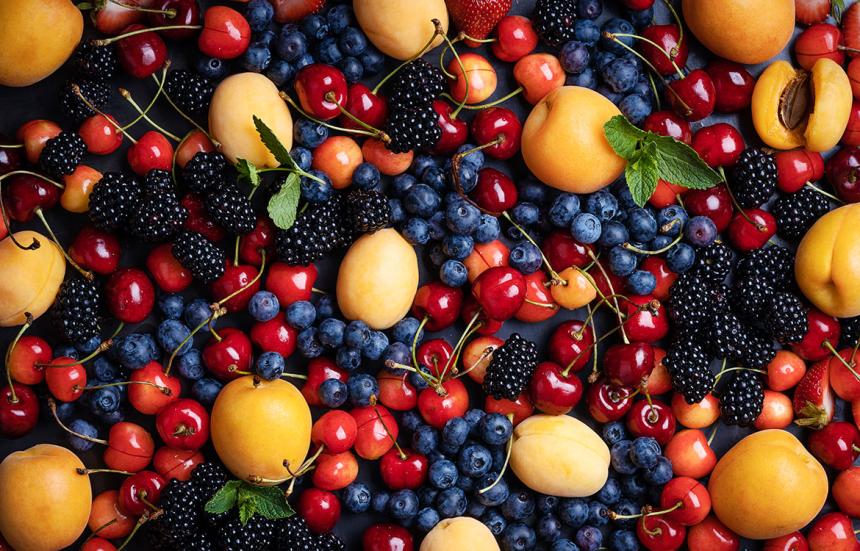
Now that we’re heading into the summer months, a wide array of summer fruits will be available. This may not seem appealing if you’ve cut back on, or even eliminated, fruit from your diet because of the sugar content. However, some fruits are low in sugar and/or have little effect on your blood sugar level. They also provide valuable nutrients and have anti-inflammatory properties that can help lower your risk for chronic conditions. Here are a few examples. Add them to your grocery list.
Melons – these include cantaloupe, honeydew melon and watermelon. Here’s where this gets a little confusing: These melons have high glycemic indexes (GI), but low glycemic loads (GL). What’s the difference? GI refers to how quickly a specific food raises your blood sugar, while GL refers to how quickly and how much the food raises your blood sugar when eating a normal serving. This means that cantaloupe, honeydew and watermelon have may raise your blood sugar quickly, they’re not raising it by much. This is because these melons have high-water content and some fiber, which dilutes the carbohydrates in each serving and helps the body metabolize them slowly, preventing spiking blood sugar levels. Moreover, cantaloupes, honeydew melons and watermelons are rich in nutrients, fiber and antioxidants -- compounds that protect against cellular damage. As a result, melons are credited with improving skin health, boosting immunity and reducing inflammation, which in turn lowers the risk of cancer, heart disease and age-related eye disorders. Watermelon is a standout among melons because, compared to other fruits and vegetables, it has a higher quantity of lycopene, an antioxidant with substantial anti-inflammatory qualities.
Berries – these include strawberries, blueberries, blackberries and cranberries. All these berries, in fact, most common berries, are low on the GI and have a low GL. However, these four types of berries are also anti-inflammatory because they’re good sources of anthocyanins and ellagic acid, according to studies. They’re also good sources of manganese, folate, potassium and magnesium – minerals involved with metabolic, immune and nervous system functions. Additionally, each type of berry also has its own nutritional value. For example, strawberries are very high in vitamin C, which promotes a strong immune system, protects cells from damage and contributes to building bones, cartilage and blood vessels. Blueberry is a considered a superfood that helps ward off oxidative stress that’s been linked to early aging, cancer and neurodegeneration. Blackberries are also a good source of vitamin C, as well as vitamin K, known for blood clotting and wound-healing properties. However, blackberries' claim to fame is their antioxidant level – it’s one of the highest antioxidant foods – and has been linked with lowering the risk of heart disease, cancer and brain health issues. Lastly, cranberries are exceptionally high in antioxidants and studies suggest they protect against cellular damage that can lead to chronic diseases. They also have antibacterial benefits, hence their use as an age-old remedy for urinary tract infections.
Stone fruits – these include peaches, plums, cherries and nectarines. All stone fruits are high in antioxidants, which help lower inflammation, and have nutrients that support bone health, immune function and digestion. However, peaches and plums also have a low GI and GL. Fresh cherries are low in GI and GL, just pay attention to your serving (a standard serving size is one cup). If a recipe calls for cherries, the cooking process may raise the GI and GL. Dried cherries also tend to have higher GI and GL. Avoid processed cherries; canned cherries are often packed in sugary syrup or juice avoid processed cherries, and Maraschino cherries have nearly three times the calories and sugar as fresh cherries. Nectarines are low in GI and GL and they’re a good source of fiber. This means that they have a slow, steady effect on blood sugar when eaten in moderation.
The take-home message is that many fruits have substantial health benefits, but they’re notoriously high in sugar. However, some fruits that have little effect on your blood sugar level. If you have diabetes or are trying to watch your weight and/or sugar intake, talk to your doctor before changing your diet, particularly if you plan on adding fruit to it.
If you don’t have a primary care physician, consider joining an MDVIP-affiliated practice. MDVIP-affiliated physicians have the time and tools to create a customized action plan for you that can focus on nutrition. If you or a loved one needs an MDVIP-affiliated doctor, click here to locate one.