Why Body Composition is a Better Measure of Health Compared to Weight

You’ve probably heard the importance of managing your weight your entire life. Unfortunately, you’re probably focusing on the wrong metric if you’re just looking at your bathroom scale.
How much we weigh is merely a number. It doesn't provide an accurate picture of your body size, shape or health. What really matters is your body composition — the percentage of fat, bone, water and muscle in your body.
Understanding Body Composition
Body composition is your body's relative amount of body fat to fat-free mass, which includes your organs, bones, muscle and body tissue. A healthy body fat percentage should be between 18 and 28 percent for women and between 10 and 20 percent for men.
The higher your percentage of muscle, the better. Muscle is more compact and takes up less space, which is why you look smaller when you have more muscle mass. But you need some body fat for optimal health. It helps regulate body temperature, protects vital organs, absorbs shock, keeps the reproductive system functioning properly (particularly in females) and maintains healthy hair, nails and skin.
Body fat should typically make up about 5% of total body weight in men and about 12% in women. If your body fat is either too high or too low, you can develop health issues. When body composition is within a healthy range, it helps manage our:
• Blood pressure levels
• Sleep quality
• Emotional mood and self-confidence
• Energy levels and endurance throughout the day
• Joint stress, reducing achy joints, hips and lower back
• Blood circulation
• Fertility rates and lower risk for pregnancy-related complications
• Breathing and lung function
• Blood sugar tolerance and insulin sensitivity
Unfortunately, unhealthy body composition is a significant problem in the United States. Nearly 1 in 3 adults (30.7%) is overweight. More than 2 in 5 adults (42.4%) have obesity. About 1 in 11 adults (9.2%) have severe obesity, according to the National Institutes of Health (NIH). Another 30 million Americans are considered skinny fat, a risk for dementia.
Where Body Fat Settles
Where fat settles on your body is also important. Your age, gender and genetics influence where fat is on your body and provide a visual glimpse of whether you are at risk of chronic disease. For example, if you have:
- Abdominal fat (or apple body shape), your shoulders are wider than your hips and you have a larger torso, which raises your risk of heart disease, diabetes and some cancers.
- Upper body fat (or inverted triangle), your shoulders are wider than your hips and you have little waist definition, which raises your risk of chronic diseases.
- Hip fat (or pear body shape), your shoulders are narrower than your hips and you have more weight in lower body, but this shape doesn’t raise your risk of chronic disease.
- Evenly balanced fat (or ruler body shape), your shoulders, waist and hips that are almost the same width; but this shape doesn’t raise your risk of chronic disease.
- Upper body and hip fat, but a defined waist (or hourglass body shape), you have a defined waist with balanced shoulders and hips, but this shape doesn’t raise your risk of chronic disease.
How to Measure Body Composition
You should measure your body composition, which is typically calculated during the MDVIP Wellness Program. If you haven't had it tested, there are several ways to assess your body.
Bioelectric Impedance Analysis (BIA)
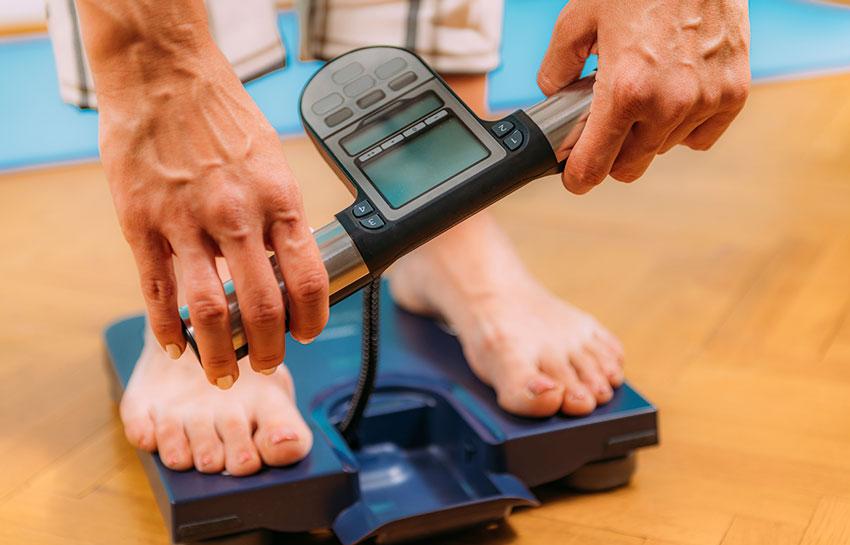
Safe, noninvasive, and quick, this method uses electrodes to send impulses through the body. Most MDVIP-affiliated physicians use a bioelectronic impedance scale to estimate body fat, muscle mass and water weight as part of the MDVIP Wellness Program. The scale can also help calculate your resting metabolic rate, a key factor in managing weight and achieving weight loss.
DEXA Scan
Highly accurate, the DEXA scan uses low-energy X-rays to measure bone density, lean body mass and fat mass. Provides detailed information about where problem areas lie.
Skinfold Caliper Test
This old school test which many people remember from elementary school is relatively easy and inexpensive, but it’s the least accurate, measuring only subcutaneous fat.
3D Body Scanner
Accurate and convenient, this approach captures 360-degree views and shows progress before a scale can.
Air-Displacement Plethysmography (BodPod) and Hydrostatic Weighing
These two tests are extremely accurate but not readily available and can be expensive.
Many people also use body mass index or BMI. For years, it was the go-to measurement for assessing healthy weight ranges based on height and weight. However, in June 2023, the American Medical Association adopted a new policy clarifying that BMI shouldn't be used as a sole method of diagnosing weight issues because it’s flawed.
It can also be used in research to help define populations, but not as a stand-alone body composition metric. Furthermore, BMI doesn't have a strong link to mortality compared to other body composition methods. While researchers found an association between BMI-identified obesity and increased risk of death from all causes, they found no bearing on mortality for those in the overweight and healthy weight categories — contradicting existing research and suggesting BMI has limited value.
Maintaining a Healthy Body Composition
Regardless of your age, gender and genetics, a healthy lifestyle can help you maintain a healthy body composition. You should exercise regularly, and your weekly routine should include at least strength training, aerobic activity and stretching (to help prevent injuries). You’ll also should consider eating a healthy diet that consists of whole and minimally processed foods with reasonable portion sizes. Finally, you may want to limit alcohol.
It’s also important to work closely with your primary care physician. They can guide you in making changes to your diet and exercise routine, while considering your health history.
If you don’t have a primary care physician, consider working with MDVIP. MDVIP-affiliated physicians have the time and resources to help you focus on your body composition and help you manage your weight. Find a physician near you and begin your partnership in health»